
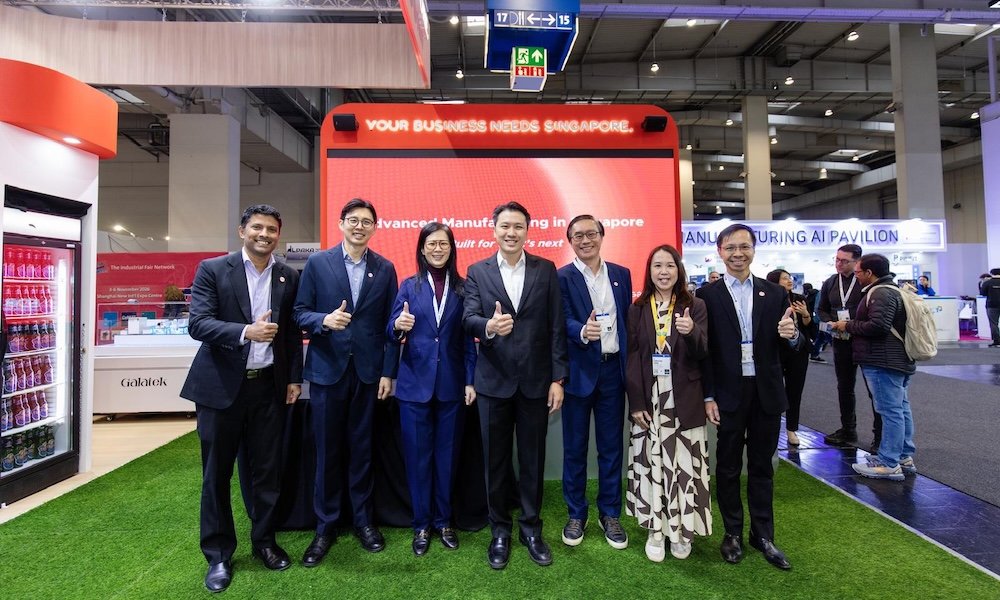
At Hannover Messe 2026, A*STAR showcased how Singapore is advancing the adoption of industrial AI through its Sectoral AI Centre of Excellence for Manufacturing (AIMfg). Held under the Singapore Pavilion led by the Singapore Economic Development Board, Hannover Messe provided a platform for A*STAR to demonstrate how AI can move beyond experimentation towards practical deployment on the factory floor.
This comes at a pivotal moment for the industry, as manufacturers increasingly explore how AI can improve productivity, resilience and operational decision-making in complex production environments.
Advancing AI in Manufacturing Through the A*STAR–Microsoft Collaboration
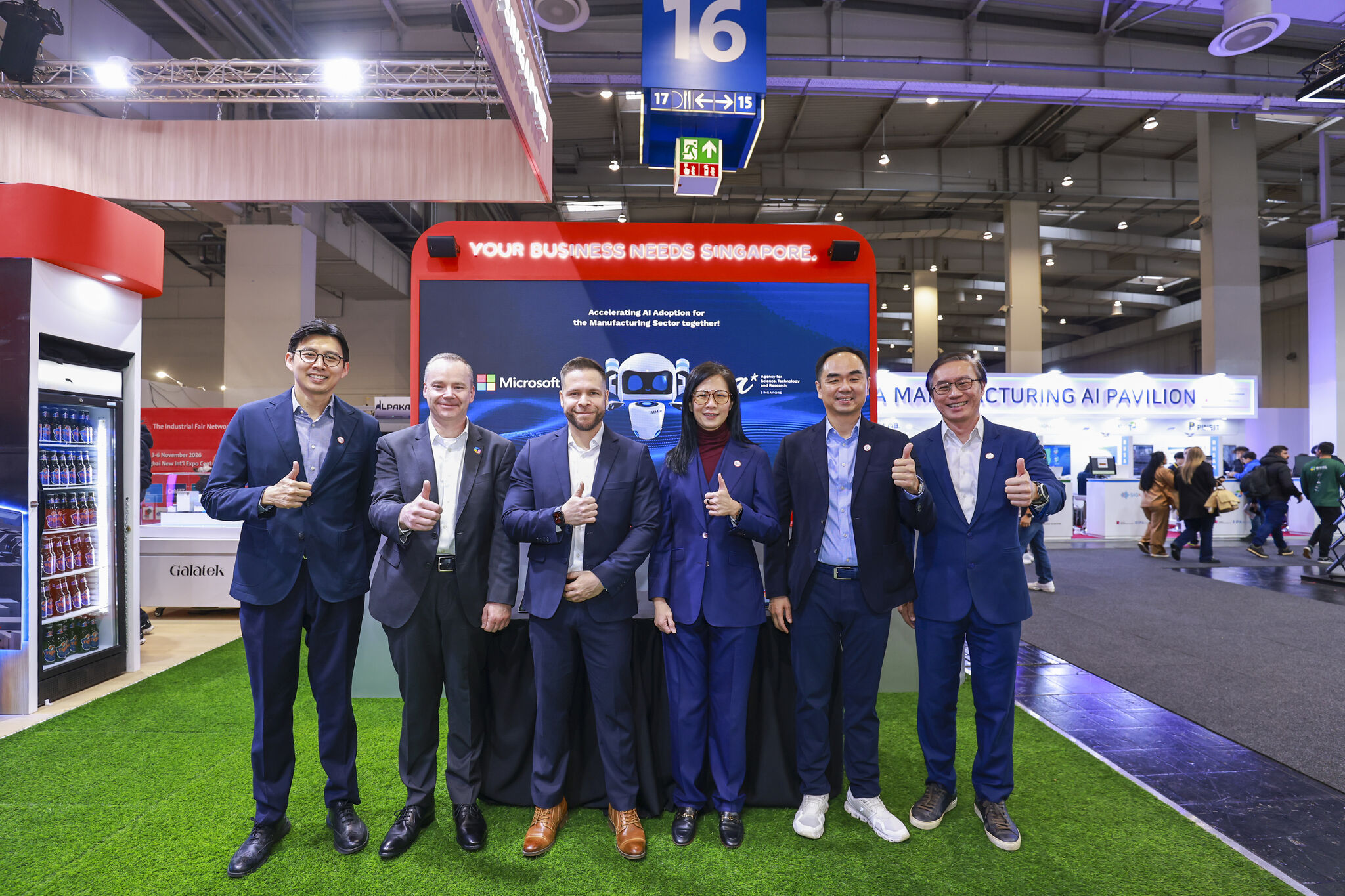
One of the key highlights was the signing of a Memorandum of Understanding (MOU) between A*STAR and Microsoft. Announced on 20 April, the agreement brings together A*STAR’s manufacturing research expertise with Microsoft’s cloud computing and AI platforms to explore advanced AI solutions for industrial environments.
The MOU, signed by Dr David Low, CEO of A*STAR’s Advanced Remanufacturing and Technology Centre (ARTC) and Dayan Rodriguez, Corporate Vice President for Manufacturing & Mobility at Microsoft, establishes a framework for advancing AI adoption in manufacturing.
The collaboration centres on three core areas:
- Developing an agentic AI platform for manufacturing;
- Strengthening the engineering and deployment infrastructure to support AI at scale; and
- Enabling broader ecosystem adoption through technology partners and system integrators.
Microsoft will provide access to its enterprise AI platform and technology expertise, while A*STAR contributes its manufacturing research and agentic AI capabilities. Microsoft Azure will serve as a primary environment for development and deployment, though solutions will remain platform-agnostic, allowing manufacturers to adopt them within existing IT infrastructure.
For manufacturers, deploying manufacturing-specific AI tools may yield benefits like higher productivity, greater manufacturing value-add and lower operational costs. Technology partners and system integrators may license and deploy these technologies for their clients while integrating them into their own service offerings.
How AIMie Enables Agentic AI for Manufacturing
AIMfg was a feature in the Innovation zone of the Singapore Pavilion. Launched in September 2024 as part of Singapore’s National AI Strategy 2.0 and hosted by A*STAR’s Advanced Remanufacturing and Technology Centre (ARTC), AIMfg represents a focus to accelerate AI adoption in the manufacturing sector.
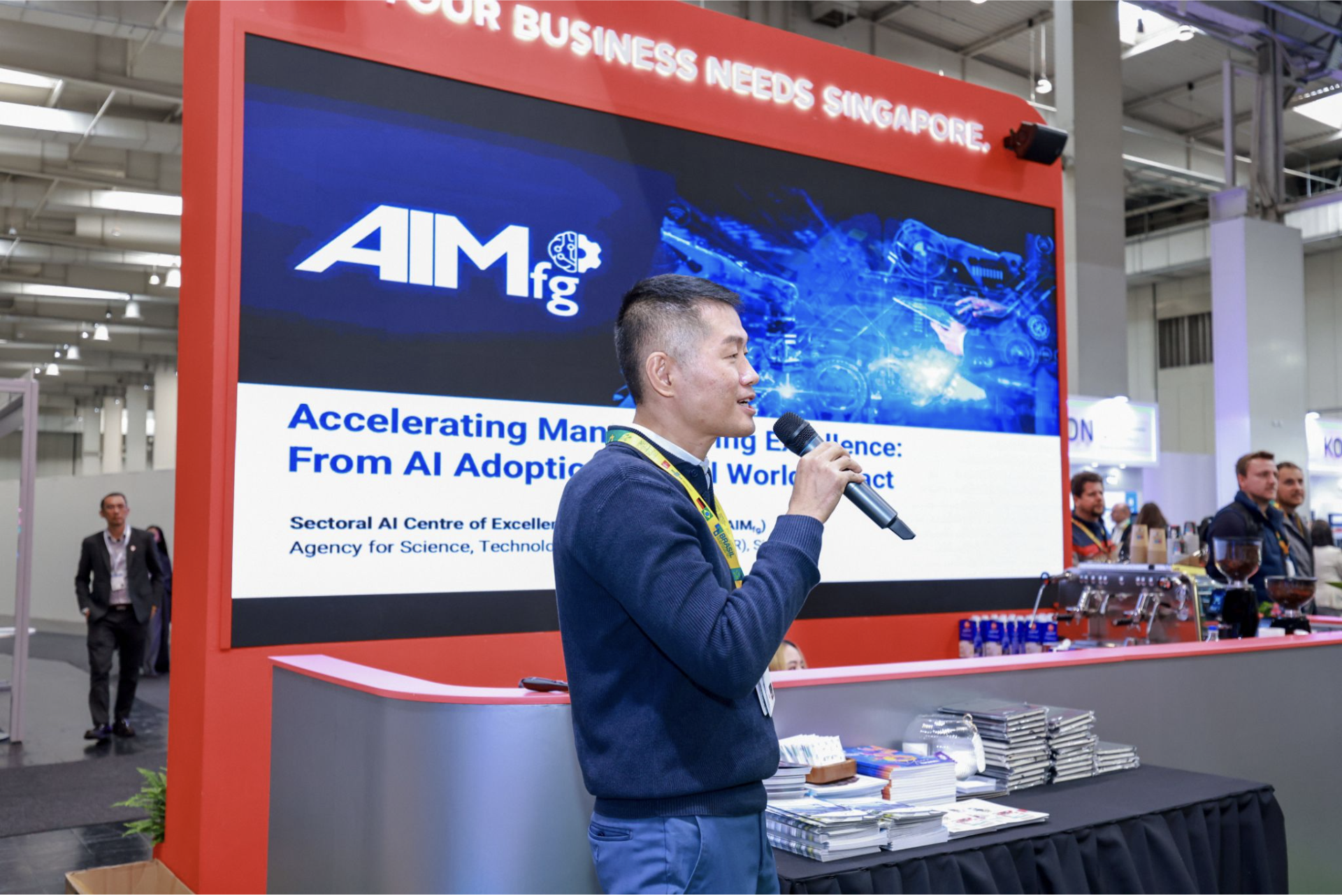
Since its inception, AIMfg has worked with more than 150 manufacturing companies and launched over 30 implementation projects. At Hannover Messe, Centre Director Dr Wang Wei and Head of Ecosystem Development Royston Phoon presented the centre’s approach and real-world impact.
Central to AIMfg’s work is AIMie, a human-centric, agentic AI that interfaces with various roles in manufacturing, from maintenance engineers to production planners. Unlike traditional automation systems that follow fixed instructions, AIMie is designed to reason, adapt and coordinate tasks in response to changing factory conditions.