
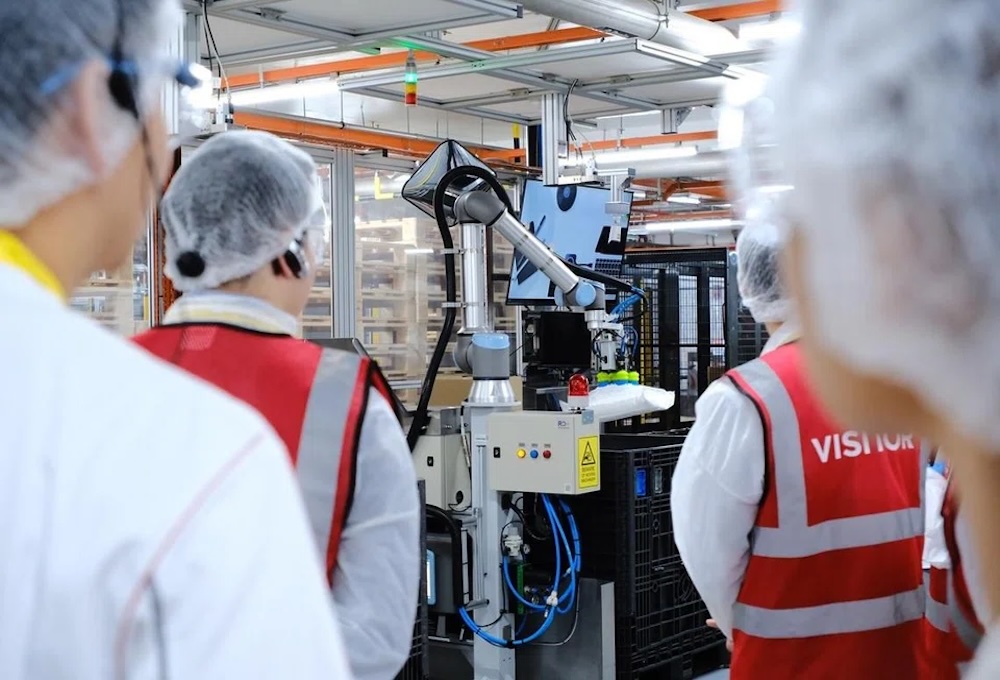
A*STAR is working with industry partners such as Coca-Cola Singapore and Mencast Marine to apply AI, automation, and additive manufacturing to improve productivity, resilience, and sustainability.
Manufacturers in Singapore are accelerating their use of advanced technologies such as artificial intelligence (AI), robotics, and additive manufacturing to stay globally competitive. Through partnerships with the Agency for Science, Technology, and Research, companies are turning research into applications that improve efficiency, reduce costs, and support long-term growth.
At Coca-Cola Singapore’s Tuas facility, A*STAR worked with the company and local partners to address growing complexity in production planning. With hundreds of regional orders each week, each requiring different formulations and processes, manual scheduling had become time-consuming and difficult to manage. A dynamic scheduling solution developed with ASTAR now completes production planning in under one hour. On the factory floor, AI-enabled robotic systems equipped with vision detection can identify and handle ingredient bags of varying sizes, improving accuracy and reducing manual effort.
These innovations have delivered measurable impact. Since 2021, Coca-Cola Singapore has increased throughput by 28 per cent, improved labour productivity by 70 per cent, and raised on-time delivery rates by 31 per cent. The facility has also reduced Scope 2 emissions by 34 per cent, demonstrating how AI and automation can support operational performance and sustainability goals.
Advanced manufacturing is also reshaping engineering-intensive sectors such as marine and offshore services. Local company Mencast Marine partnered with A*STAR and the National Additive Manufacturing Innovation Cluster to integrate AI-driven design and additive manufacturing into its operations. This enabled the company to produce Singapore’s first 3D-printed marine propeller and significantly reduce production time.
Using AI-based design algorithms, Mencast can now generate thousands of propeller design variations within days, compared to weeks previously required for manual processes. The adoption of Wire Arc Additive Manufacturing (WAAM), a robotic 3D-printing method, has halved production time while reducing material waste and carbon emissions. These capabilities help customers improve fuel consumption and performance through customised and efficient designs.
Beyond individual use cases, A*STAR continues to support manufacturers in different sectors by combining AI and digital technologies to strengthen supply chain resilience and improve operational agility. These efforts align with Singapore’s Manufacturing 2030 vision, which aims to grow the sector and deepen technological capabilities.
A*STAR is also advancing new innovations such as AIMie, an agentic AI framework designed to support human-AI collaboration in manufacturing environments. AIMie can adapt to changing conditions and assist operators in decision-making, which enables workers to take on higher-value roles.
As part of the Sectoral AI Centre of Excellence for Manufacturing (AIMfg), these capabilities provide companies with access to tools, expertise, and a collaborative environment to develop and deploy AI solutions at scale.
